Showing posts with label Teenagers. Show all posts

Friday, February 12, 2016

Eyes Roll Ears Close: 3 Tips for Lowering A Tense Conversation with a Teenager


You can feel the tension rise.  

A button was pushed and the tempo and volume of words increase.

Listening has flown out the window and you are only hearing words that provide opportunity to pounce and launch a another great because I am the adult type lecture.

As you run through your lecture, the eyes of targeted teenager actually appear to role back into the cavity of the brain and reappear possessed by some demonic, hormonal force shooting a laser through your soul.

The laser does not silence your barrage of words.  It increases the tempo and frequency of your words as you begin to say things you swore you would never repeat from your own echoed past...

"If you want to live somewhere else, I will pack your bags!"

"I would have never talked to my parents the way you are talking to me!"

"I hope you enjoy boxes because you are going to be living in one if you don't get those grades up!"

Have you ever had this type of conversation with a teenager?  With the teenager living in your home?

Tension and Conflict are often part of the chaotic dance parents and teenagers go through on the journey towards independence and adulthood.  When the tension and conflict rises, no one typically wins. Personally, when I am in the middle of (what I think is) a great lecture, I feel validated and empowered as I am giving a certainly magnificent-life changing instruction.  After the lecture, when the tempo and volume have settled, I am faced with the truth that all of that magnificent-life changing instruction came across with the effectiveness of Charlie Brown's teacher!  Why?  When the eyes roll  the ears close!

What do you do when tension is on the rise?

There are a bunch of breathe deep and go to a happy place relaxation suggestions, but these 3 tips will get the tension lowered quickly and further strengthen your communication skills with teenagers:

Ask for a time out and Walk Away.  This suggestion is for both adult and student.  You can develop a special word that signals I am taking a time out and walking away or simply agree to say, "I need to take a break" when the conversation is too heated.  The point is, rejoin the conversation when the tempo and volume are settled (this may take a while-don't rush it).  Remember, calling a time out does not mean you ignore the conversation.  You simply pick the conversation up when the ears are open and the eyes stop rolling.

Don't Chase.  This one is especially true for the adults.  Remember what I wrote above about feeling validated and empowered while giving "certainly magnificent-life changing instruction"? Yes, this is my problem.  Confession time, this is my biggest problem with my own kids.  At times, I do not allow for a time out and walking away.  I chase.  Not sometime, but all times, this ends badly. It is an  eyes roll ears close guarantee move.

Stop Lecturing. This one is for both, but especially adults.  Keep your words short and to the point. this is the first step in keeping the eyes watching and the ears listening.


Wednesday, February 25, 2015

Falling to Stand Up


"It is one of the most difficult things I have ever done!"

This statement has come from the lips of parents who, even though they could have prevented the outcome, refused to intervene and allowed their kid to fail.  To be transparent, these words have come from my lips as well.  Knowing the foreseeable outcome and letting your kid fail and suffer the consequences of their own actions is truly difficult.  However, even though one of the most difficult challenges faced by a parent, it is imperative that we not intervene in every instance that failure is the certain outcome of a poor choice. 

Certainly, there are times when a life/death decision is in the balance and intervention is warranted.  For example, a kid that believes they can float from the highest tree branch via umbrella needs to be stopped.  Or, the kid that runs into the street needs to be stopped and instructed of the danger present when such action occurs.  This type of intervention is part of helping children grow and understand the inherent dangers of living.  However, at some point, a child will have all the information they need and will make a choice.  That choice will have consequences-good or bad.

This is where the blur begins.  A parent/guardian and the wise adults providing counsel (hopefully everyone reading this has or is building a wise team for counsel-parenting is a team sport) will arrive at a point that they know they have to step back and let the kid accept the consequences for their own choice.  That point is different for each student (the blur).  BUT the point where training has been completed will arrive and the parent/guardian will let their student experience the pain of failure.  Again, it is one of the most difficult things a parent can do but it is essential to a kid's development that failure is allowed to happen.

Failure is not fatal.  Failure can refine and define a kid.  Kids that are allowed to fail refine their efforts, focus and determination to learn from their mistakes.  Kids that are allowed to fail define their true strengths and weaknesses. 

Yes, there are extremely painful allowed to fail situations in which a student's moral failure(s) has lead to major consequences.  Allowing failure in these scenarios causes great and nightmarish pain for parents/guardians.  Even so, without the consequences of a hard fall some students will never be able to refine and define their lives.

So, here is a set of questions for all of us to consider:
  • Do you complete your student's homework and projects because you are afraid of them failing?
  • Do you complain when your student does not get the playing time you believe they "deserve"?
  • Do you fight your student's traffic tickets because you are afraid of their "permanent record"?
  • Do you cover your student's moral failures from caring adults that have expressed concern?
  • Do you work harder than your student in trying to make them "successful"?
  • Do you allow your student to "work you" and remove consequences from them when house rules are broken?
I know that in the real world these questions are not always cut and dry.  Even so, how did you do?  
Even though difficult, failure is an essential element in a child's moral, spiritual and social development.

Remember when your child (all of us) learned how to walk?  Falling was the natural consequence of balancing first steps.  If our parent/guardian never allowed us to fall we would not have learned to walk.  It was literally a falling to stand up learning experience. 

It is good to let kids fail.


Friday, February 20, 2015

Observations from a Social Media Addict


"Hello, my name is David and I am a social media addict!" 

I have discovered this truth while in my recent Social Media Fast adventure.  Many times over the last few weeks, I have reached for and/or wanted to check my status, likes/dislikes, comments and messages.  Hopefully, as I have trickled back on the "social media juice," I have learned a few things. 

I have sorta ended my Social Media Fast.  I say sorta because I have established a few rules to better use the ol' social media in hopes that I do not let it consume too much of my time.  There is much I have observed and many lessons learned during my fast.  Here are a few that top my observations-lessons learned list:
  • We, not just teenagers, are way too involved with social media.  I really don't believe I have to unpack my observation.  Seriously, I can track several of my "friends" days from breakfast, lunch, supper,  date nights and love life (I know--ew) by reading their facebook and/or twitter updates.  My fast brought to light how many times I have often missed a present, never to be repeated moment because I had to tweet and post the event out to the world.  Or, I am missing a present, never to be repeated moment because I am responding to a tweet or post from someone else's life.
  • People really did not miss my presence on social media & I lost NO FRIENDS during my fast (Actually, I may have deepened a few of my friendships during this period of time because I had to old school text, talk on the phone and have face to face conversations). Hard truth, people are not waiting to hear and see what I have to post.  "What?"  "I love your posts Dave!"  "They inspire me!"  I am grateful that many of you like to read the material I post.  However, I am certain you found other inspiring material to read while I was away.  Point, we should not take our cyber presence so serious.  Hard fact, their will always be someone to take our place in the ocean of social media.
  • I am a much better husband, dad and friend without social media participation.  Why?  I was removed from the comparison, competition, consumerism and corresponding drama often created by social media participation.  It is amazing how much better I relate to others when I only have my present reality and context to draw from.
Here are some rules I am putting in place to better use and not abuse social media.
  • Turn off Social Media alerts.   This allows me to check social media information when I want to and not respond (like Pavlov's dog) when I hear a "ding" or other notification sound.  Test, if you have ever reached for your phone when you heard a familiar "ding" or notification sound only to realize it was the person's phone next to you, you may want to turn off those alerts.
  • Turn off your social media when in the presence of spouse, family and friends.  Sure, pictures and videos are fun-capture those memories; but, wait to post!  DON'T loose the moment! 
  • Stop rationalizing and accept accountability. Someone will or has let you know when you are way too into social media. Listen to them and accept their correction.  My wonderful and wise wife has spoken this truth into me countless times and let me know that my social media consumption was out of control!  We all need to listen and respond to those who are trying to tell us something.  Oh, I have seen where fellow social media "junkies" tell other "junkies" to ignore the accountability and rationalize the over usage of social media-That's called co-dependence folks!
  • I will control social media and not let social media control me.  To be clear, social media is important and real social contact takes place in this location. So, I will continue to take periodic fasts from and control my participation in this powerful, cultural medium.  
I hope these few observations, lessons and rules help your social media consumption.  Now, stop reading and tweet and post this blog to the world.  Oh wait...let the present reality of this blog hit home and post later (when you are not around your spouse, family and friends). 


Wednesday, December 10, 2014

The 3 Most Powerful Words in Youth Ministry


"I like you!"
What if these were the 3 most powerful words in Youth Ministry?

Student ministers use the word "love" a lot-maybe too much.
"I would love to have lunch with you guys."
"I would love if you joined us at our church."
"I really loved the sermon today."
"I really love hanging out with students."
"I really loved that conference."
"I love this scripture, praise song, camp, mission site, preacher, blog...etc."

Oh, and there are given love statements students expect to hear from student ministers.
"God loves you."
"Christ loves you so much he died."
"The Spirit loves and lives inside of you."

Don't misunderstand.  These are all fine and appropriate things to say.  But what if students need to hear something else from you?  What if they need to hear words that would help them clearly understand and believe the love statements you are desperately trying to communicate?

Perhaps a disconnect comes from students wondering if you like them?
I would say, for the most part, student's know you love them (that's why you drive vans with stinky teenagers in the heat of summer and plan lock-ins).  But do your students know you like them?
Do you hang around with the same students, families, activities?
Do you talk about the same type of activities in your lesson illustrations?
Do you pass certain students to talk with others on a constant basis?
Do you have inside jokes with a limited number of students?
If you answered yes to a few of these questions, you may be communicating an "I don't like you" message.

Teenagers experience moments in which they doubt anyone likes them or that they possess a talent or ability that is likeable.  They go through stage(s) in their life in which they feel invisible or at best common among peers.  These are difficult times in which student's battle with tough developmental questions:
"Who am I?"
"Do my choices matter?"
"Where do I belong?"
These moments certainly call for a flood of love statements from caring adults and youth workers.  But, in my opinion, these moments call for an even greater flood of like statements to validate the worthiness the feel to receive words of loving guidance into their core. 

Let me give you an example (this example has been changed for confidentiality).
Years ago I had a young lady in my youth group that was difficult to like.  She had a disability that made her irritable, argumentative and pretty much unable to work with others (imagine how complicated work projects could be if you were on this person's work crew).  On top of all this, she came from a rough home situation and was often unkempt in appearance.  She heard many love statements from our youth ministry team which seemed to fall on deaf ears.  Why? She did not believe anyone liked or could like her.  However, a group of students decided to "include" this young lady into their group (I know...a clear breach of teen world protocol) and caring adults began to point out unique things to like about this young lady. This changed everything. In short order, the like statements made it possible for the love statements to sink deep into her core. 

I am certain we all have students that need a flood of like statements.  There are many things youth ministers and adults can do to begin a like flood, but here are a few suggestions:
  • Spend time talking with the "unlikeable" in the presence of more "likeable" students.  There is great significance and like shown when passing the students that get all the attention from adults for students that stand apart from the group or look for a place to hide in the crowd.
  • Go to all types of events to support your students.  As a youth ministry professional or volunteer, you will naturally feel more comfortable around certain groups of students (athletic, artistic, creative, alternative, etc).  Fight the urge to support one group over another.  Yes, this is difficult, but  a loud "I am likeable" message is communicated to students when you show up at games, concerts, performances, competitions or house.  Please don't be that, "I only relate to athletic (insert other comfortable) students" type of youth minister.  
  • Communicate like messages to students.  Old school works best here.  Send an email, text or write a note and put it in the snail mail highlighting something you have seen that is unique, praiseworthy and likeable about a given student (I recommend you stay away from tweets-those can backfire and become a self-esteem competition) . Students cherish such communication.
  • Share the praise from the stage.  It is easy to call to the stage as an example and/or volunteer the likeable students.  Why not share the stage with those who never or hardly ever share the spotlight? You will be communicating a strong like message. CAUTION:  Some students do not like the stage.  Do not embarrass a student-that message would change into an unlike message quickly.
Enjoy practicing the 3 most important words in youth ministry, "I LIKE YOU!"

Saturday, November 15, 2014

Don't Get Worked!


I come across all types of messages, pictures and conversations while perusing (I have been waiting to use this cool word) social media sites.  The picture below is a dandy and highlights a way too common failure in parenting.

Staged?  Certainly (at least I hope so).

Exaggerated?  Certainly (at least I hope so).

Truth?  Certainly (I know so).

Kids of any age, especially teenagers, will look for ways to get what they want.  They will ask one parent and then ask the other if the answer they receive from the first is not the answer they wanted (read that sentence again).  While every home experiences this common kid/student practice, homes that are blended, single-parent, separated, grandparent and/or adult guardian led can be particularly subject to being "worked" by the students in their care. 

If you are reading this and are the parent/guardian who trumps the other parent/guardian with the "yes," this is a problem.  You are not being cool, better and/or more understanding.  You are causing damage to your student's future understanding of how the real world works and actually hurting your kid.  Oh, and you are being "worked."

If you are reading this and are the parent/guardian who is being trumped by the other parent/guardian, you have a part in this "working" as well.  Is there a reason you are being trumped?  Are you allowing for dialogue with your other parent/guardian or does everything have to be done your way?  This too causes damage and impacting your student's understanding of how the real world works.

So...how can parents/guardians prevent being successfully "worked" by their kids? Here are a few suggestions:
  • Check with the other parent/guardian.  It can be as easy as a phone call or text.  When asked by your student to do, buy, go, etc. something, take a moment to check with the other parent/guardian.  If there is disagreement, tell your student you will give them an answer later.  It is okay for your kid to wait for an answer.  You are the one in charge.
  • Talk with the other parent/guardian before a question is given.  What are your feelings on dress, parties, music, movies, friends, etc.?  Talk about your values concerning each of these topics before your kid asks to do, buy, go, etc.
  • Respect and support the opinion of the other parent/guardian.  In other words, if a student says, "Can I go...?" and you ask, "What did your mother say?"  Support your spouse/guardian.  Be on the same page. This is a particularly difficult thing to do if you are in a divorced, separated or single parent situation.  Still, it is important that both father and mother have a civil and productive conversation on what is best (yes, this can be subjective) for the student(s) you have a responsibility.  If respect and support are difficult, find a counselor or trusted adult that can mediate a civil and productive conversation so that both parents/guardians can be on the same page.
While being "worked" is a natural hazard of parenting a student, a little "work" by parents/guardians before goes a long way.


Thursday, October 16, 2014

Auto-Correct Humanity


My dear friend Cindi Schrimsher (who loves her social media) shared this video with several of us last week.  The video speaks for itself and helps create dialogue on the use, misuse and overuse of technology in today's world.  If not careful, we will lose more than we know.


I told you.

Enjoy the dialogue...I am going to turn off my computer now.


Tuesday, September 23, 2014

Rules for Revolution


I receive a lot of forwards and Cc-s in my inbox.  Typically, they are rushed into the trash bin.  However, there are a few forwards and Cc-s I rush to read.  This is one of those.  
In no way am I attempting to make a political statement or liken any political party's agenda with Communism.   I am sharing the following newspaper clipping from 1919 (via 1970-1975) to help all of us evaluate our 2014.  

 
Feel free to make and/or share your own observations.  I suggest reading the article through the various lenses of faith and family.  NOTE:  Even though a rich conversation starter on current political topics, I do not welcome political observations on this blog sight and/or Facebook.  

I do invite you to share observations as they relate to faith and family.  

I do encourage you to use these "Rules" as a discussion starter with Adults and Students. 


Wednesday, September 10, 2014

Lecture Little-Listen Lots


My dear brothers and sisters, take note of this: Everyone should be quick to listen, slow to speak and slow to become angry, because human anger does not produce the righteousness that God desires.
- James (1:19)

What a great verse for all of us who parent or work with teenagers.  A difficult verse-but great!

Why is it difficult?

Because, like the adults who came before us, I believe I have something to say that is filled with wisdom and needs to be heard.  I no longer need to listen.  I need to engage.  


Did you catch it?  The word "I" was used 4 times in the last few sentences!   A moment of transparency-isn't this what gets most of us parents and adults into communication trouble with teenagers?  It is more about assuring that our words are heard than listening to theirs.  Pause and consider that last sentence again. 


I am not advocating a release of parental/adult authority.  I am suggesting that more listening actually enforces and/or regains authority and lowers the anger level (it is what the Bible says).  Here are a few better listening and talking (lecturing) suggestions:
  • Ask Questions.  Let me start by saying this step may lead to a high frustration level rather quickly (when a student answers a question with "I don't know" or "Whatever"-you may need to read the ONE of My Parenting Flaws post again).  Still, ask leading questions of students. Questions that invite them to express their opinions, thoughts, perspective or defense first.  Questions like...
    • Why would I have received an email from your teacher?
    • What happened that your were late coming home last night?
    • Did you know(name of friend)'s mom called me yesterday? 
    • (After emotions settle) What got you so upset this morning?            
          ...provide a student with a first response opportunity.

  • Let students finish their answer before you respond.  Responses naturally lead to follow up questions and need for further clarification.  Before you make a follow up move, be sure you let the student finish their answer. I know, easier said than done.  Students often spin a response and/or lie to protect themselves or friends.  Still, before the logical follow up moves, listen to their entire response.  Again, when you know the answer to the question before you ask, patience and calm is key and very difficult. 

  • Set the table. If you know the conversation you are about to have with a student is going to be difficult, say so at the beginning.  Statements like... 
"We need to have a conversation about your homework (just picked a difficult topic). We have talked about this a number of times and has led to a few arguments.  I believe neither of us wish to have an argument.  So, even though it may be difficult, I want to hear what you have to say and see if we can have a calm discussion about what we can do to improve the situation."

         ...can really lower stress levels and set positive expectations for the conversation and outcomes.

  • Use a "cheat sheet."  Before having a difficult conversation with your student and to assure you have your questions and information you wish to share prepared, write it down. Often, when the listening stops and the powerful "I" begins to surface,  it is because our emotions take us off script.  When this happens, the logical next step for parents/adults is to take an authoritative stance and take control.  
Communication is difficult in the best of situations.  I can tell you from personal experience that the powerful "I" reactions have surfaced on more than one occasion in my relationships with teenagers.  Don't give up.  Keep practicing those listening and talking (lecturing) skills.

Thursday, August 21, 2014

"Your Parents are Wrong!"


"Your Parents are wrong!"  


I make this comment at least a couple times a year when speaking to students on the topic of moral decision making in the context of Discipleship (fancy word for following the example and direction of Jesus in how life should be lived).  The comment reflects a reality that parents, and surrounding adults, have the ability to negate and/or disqualify the moral directives of Jesus by the way they live their lives.  My wife Lisa and I often say, "We can not out teach what happens in the home or surrounding adult community. We are just not that good."  So, when teaching on moral decision making, the statement is a challenge for students (all of us actually) to follow the example and direction of Jesus over any authority that stands in contradiction with His lead.   Just in case you are wondering, I do not incite students to riot against authority (could be awesome but very irresponsible).  We are to honor our father, mother and those in authority over us (that is also part of discipleship-Ephesians 6; I Peter 2).  Still, as a Disciple of Jesus, his authority over our moral decision making is of first priority-we do call Him Lord of our life. So...

"What should I wear?"
"How should I speak?"
"What movie should I watch?"


"Should I do my own homework?"
"What music should I listen to?"
"How should I view authority?"
"How should I spend my time?"

are decisions that SHOULD be impacted by our commitment to follow Jesus as Lord.  Again, "Your Parents are wrong!" is not a statement derailing adult authority.  It is a statement highlighting the elephant in the room.  Adults (speaking to myself here) need to live with the weight that the way we live our lives before our students (our own and others) directly impacts the way they make moral decisions.  Check this out:

“the most persuasive moral teaching we adults do is by example: the witness of our lives, our ways of being with others and speaking to them and getting on with them—all of that taken in slowly, cumulatively, by our sons and daughters, our students.”
–Robert Coles, The Moral Intelligence of Children

Hard Reality:  Students with the very best, morally solid, examplar adults in their lives can make the worst decisions (it is all that free-will stuff).  


Harder Reality: If your student is making poor choices, the first place you should look is at the moral witness of your home and surrounding adult community.

Thursday, August 14, 2014

Read this Church: A Sticky Faith Testimony


There is actually a joke that often circulates around my office and other church staff meetings. It is more of a comment concerning the number of times the word "Intergenerational" comes up when I am involved in ministry conversations.  To be honest, I love that the word has become a part of our church's vocabulary and love every time the word is used in any context.

David, "Why do you love being annoying?" (annoying may be a bad word, let's say persistent)

Because focusing on Intergenerational relationships in Youth Ministry create a wonderful tapestry of support structures that help students embrace and mature in their faith.

I want you to read the blog post from one of our recent 24:7 Student Ministry graduates.  I do not share this to "brag" about our church and ministry programs (I could brag about the greatest group of adult volunteers in the world).  I also do not share this to highlight one student above another (all of our students are wonderful).  I share this as a testimony of the impact a church with an Intergenerational focus can have on a young person's life.   By the way, I asked permission to use his post but you may want to make this young man's blog a regular read. Here is the link jaredking24.wordpress.com

__________

Thank You

This blog really has a dual purpose. First and foremost, I’d like to thank everyone who has been involved with The Hills Church of Christ 24:7 Student Ministry, to any degree, for changing and shaping my life. The second purpose is to brag on what an amazing student ministry 24:7 has been, and will continue to be in the future. But first, a disclaimer..
*In no way, shape, or form does my declaration of immense gratitude to all 24:7 related parties signify  the end of my contact with said parties, or the participation in said ministry. I plan on staying active in the lives of those at The Hills, and will be as involved as humanly possible while living three hours away. You can’t get rid of me that easily.*
Now before the tears start flowing, thank you…
The Hills Elders and Senior Staff: Thank you for being possibly the most loving and caring church leaders on the planet. While The Hills is the only church I’ve attended regularly for the last 13 years, I’m well aware that many church leaders do not look upon the youth of their congregation with the same fondness and respect I have seen from you. I love that you have thrown out the old saying that “children are the church of tomorrow” and have actively sought to make us a part of the church today. I can’t imagine other churches having most of the senior staff speak for the youth group on an annual basis like Rick Atchley, Cary Branscum, Mike Washburn, Charley Taylor, and many others have now done the past few years. Even more incredible is the way you have attempted to integrate teens into the church wide ministry boards whether it be Men’s ministry, Women’s ministry, or Missions. Saying that we are the church of today is one thing, but asking us to take responsibility for what is going on in the church is another level of confidence that means the world to me and many others who want to feel like an important part of the church. Thank you to the elders who constantly prayed over us before retreats, camps, mission trips. The words of blessing sometimes spoken at 7am or earlier on a Saturday morning mean more than I can fully appreciate. Thank you for the way you treat the youth staff. From watching and hearing stories of how my dad was treated by elders and senior staff as a youth minister, I should have no desire to become one. But because of the love and respect I have seen you give Dave, Jason, Darin, Melanie, and Nicole, I have hope for my future church to want show Christ to all they meet, regardless of age.
The 24:7 Youth Staff: Thank you for literally changing the course of my life. I have no idea where I would be going and what I would be doing with my life if it wasn’t for your love and example. It was 8th grade when I first decided I wanted to become a youth minister. At that point it was just cause I loved worship and liked the idea of going to camps and retreats and getting paid for it. But over the last four years, especially this past year, you have taught me what being a youth minister really means. It is so much more than anyone on the outside could ever imagine. You have let me in on the heart of 24:7. You’ve shown me hearts aren’t always pretty; tensions flare, stresses rise, patiences are tested, and heartaches happen. But the joy I’ve seen radiate through you in spite of all you have seen is what is truly inspiring. Thank you Darin and Melanie for getting me hooked on 24:7. Until E-camp my 6th grade year I wanted nothing to do with 24:7 and the OKC and Little Rock mission trips made me realize the joys of serving others. Thank you Jeff and Jason Allen for being a light in my life from another campus. I thoroughly enjoyed the time I spent with each of you on trips. Southlake and WFW are in excellent hands with the two of you at the helm. God is doing amazing things through you. Thank you Nicole for the impact you made on so many teens lives while you were here. I learned a lot from hearing stories of you counseling students and watching you work in the lives of many of my friends on incredibly intimate levels. Nashville is ridiculously blessed to have you changing lives there. You and Melanie have been shining examples that women are needed in youth ministry. Thank you John for all the things that you have done with the band and your creative inputs throughout the ministry. Also thanks for helping me realize I could sing. Leading worship with you is one of my absolute favorite experiences in 24:7. Thank you to Jason and Dave for putting so much into my life to help me grow foremost as a man of God, but also as a future youth minister. The experiences you have given me I wouldn’t trade for anything. Whether it was letting me on staff at e-camp, taking me on speaking engagements, letting me teach lessons, or just talking with me about life, you have shaped the way I look at life and at ministry specifically. If I could be half the men you are, I would be perfectly content with my character and my ability to minister. Thank you to all the staff on each campus for being an example of Christ to so many teens over the years and for years to come.
2013-07-05 01.44.12
The Adult Volunteers: Thank you for being what likely separates 24:7 the most from other student ministries. I have never seen such a large group of adults care so deeply about kids that were not their own. However, many of you have treated me like one of your own and because of that I am truly blessed. D-groups have shown me what it means for the body of Christ to raise children. The love that I have felt from The Wards, Halls, Peschells, Jones, and all the other parents of my class involved has kept me on the path for years now. I love knowing that just because I’m farther away the relationships don’t end and you will continue to make sure I’m on the path. Thank you to the Herrera’s. Brian and Angela, you have been actual family to me and I often forget we aren’t actually related. It feels like I have known you forever but its really been less than three years. But in that time you have opened up your home and opened up your lives for me and so many others. Your transparency is inspiring and your willingness to give advice and encouragement is wonderful. I don’t know what I would do without your family. Thank you to all the volunteers who have simply talked with me and encouraged me throughout my 24:7 experience. Without you 24:7 would not be the safe place it has been for countless teens who desperately needed caring and Godly adults in their lives.
The Students: Thank you. I am honestly at a loss on how to display the affection I have for all of you. I have been blessed by so many who have come and graduated before me but blessed my life and gave their friendship to me. I have so many dear friends in classes behind me who consider me a role model but I learn more from them than they possibly could from me. Awesome things are going to happen through 24:7 because of those of you who will be leading in the years to come. Thank you most of all to my fellow graduates. We did it. We made it through the hell that was middle school and thrived in the joys and pains of high school because of the bond we have with each other through Christ. I have no doubt that I have been a part of the greatest class to have ever gone through 24:7. The things that you all will do with your lives for the Kingdom are limitless. I don’t know what to say other than each one of you has my undying love and regardless of us going separate ways, we are still the body of Christ. In times of joy, we will be there. In times of pain, we will be there. In times of normality, we will be there. In times of uncertainty, we will be there. When time is no more and Heaven has come to earth, we will be there.

2014-06-28 00.08.27
“I will give them a heart to know me, that I am the LORD. They will be my people, and I will be their God, for they will return to me with all their heart.” -Jeremiah 24:7

__________

As I look at the picture Jared shared above (Senior Class 2014), I am certain many, if not all, of these students could share stories of a church and adults who have impacted their spiritual journey in "Sticky Faith" manner.

Senior Pastors, Executive Ministers, Student Ministers, Adult Volunteers, Parents...it takes effort, causes frustration and there are mistakes that can be made when in attempting to keep an Intergenerational focus in programming (I know, we make a lot).  Still, the results are worth the cost!

Wednesday, July 2, 2014

A Seriously Playful Week of Camp


(In front of the selection panel on our ICE CREAM TRUCK!)


 Jesus called a little child to him, and placed the child among them. And he said: “Truly I tell you, unless you change and become like little children, you will never enter the kingdom of heaven. Therefore, whoever takes the lowly position of this child is the greatest in the kingdom of heaven. And whoever welcomes one such child in my name welcomes me. -Jesus (Matthew 18:2ff)


"This is the most fun I have had since I was 5 or 7!" These were the words spoken by a high school student last week at a summer camp.  What's the big deal? He was serious.  
It appears that scholars (Elkind, Clark, Hirsch, and others) are right.  The world in which we live is squeezing the life out of our students.  Much of what they do is judged, critiqued and then shipped back to them for improvement.  Everything (their words not mine) is a competition.  Last week, at a magical place called Pine Springs Summer Camp, we stopped the competition, critique and shipping and replaced them with play, creativity and worship.  
The result?

Our students (and adults) discovered or rediscovered what it looks like to have a child like faith in Jesus.  It was awesome and life changing!  

Why spend a week exploring child like faith? Read these words from Robert Capon:

We are in a war between dullness and astonishment. The most critical issue facing Christianity is not abortion, pornography, the disintegration of the family, moral absolutes, MTV, Drugs, racism, sexuality, or school prayer.  The critical issue today is dullness. We have lost our astonishment. The Good News is no longer good news, it is okay news. Christianity is no longer life changing, it is life enhancing.  Jesus doesn’t change people into wild-eyed radicals anymore, He changes them into “nice people.” (Episcopal priest Robert Capon used by Yaconelli in  Dangerous Wonder)

This past week, dullness was attacked and wonder pursued and nice people challenged to be radicals for the Kingdom of God! 

It was a Seriously Playful Week of Camp

Check out all the fun!


Thursday, April 10, 2014

The Tale of Two Stories


I am a news, talk and stories of interest watching junky (yes, ESPN falls into the category).

While tempted to join the hundreds offering commentary and opinion on the widely covered and painful school tragedy in Pennsylvania, I simply offer a heart broken prayer and wait to visit this topic when further information is made available.   It has been my experience that many will offer simplistic, passionate (right or left wing) explanations to a complex and pain filled issue.  Again, I would call all of us to pray for everyone involved in this terrible situation.

There are two news stories that really caught my attention this week.  I share these with you with little dialogue and corresponding questions for a reason.  One, the videos are easy to contrast and draw meaning.  And two, I really think it would be great if you share the stories and questions with your family, friends, coworkers or students for discussions.  Now, before I share the videos, a setting of the stage (just because) with the classic work of Charles Dickens.

The two stories I will share, in prophetic fashion, bring the words of Dickens, Tale of Two Cities to life:

It was the best of times, it was the worst of times, it was the age of wisdom, it was the age of foolishness, it was the epoch of belief, it was the epoch of incredulity, it was the season of Light, it was the season of Darkness, it was the spring of hope, it was the winter of despair, we had everything before us, we had nothing before us, we were all going direct to Heaven, we were all going direct the other way...

Let's start with the worst of times story from a Today Show segment (Be patient with the link. It starts with a commercial and has a rather long pause before the actual story appears).

Lying
  • Why would I qualify this as a worst of times story?
  • How does this story relate to these words from Jesus?  “You have heard that it was said to our people long ago, ‘Don’t break your promises, but keep the promises you make to the Lord.’ But I tell you, never swear an oath. Don’t swear an oath using the name of heaven, because heaven is God’s throne. Don’t swear an oath using the name of the earth, because the earth belongs to God. Don’t swear an oath using the name of Jerusalem, because that is the city of the great King. Don’t even swear by your own head, because you cannot make one hair on your head become white or black. Say only yes if you mean yes, and no if you mean no. If you say more than yes or no, it is from the Evil One." --Matthew 5:33ff
  • How can a Christian fulfill the words of Jesus and successfully navigate today's competitive world?  (if you say only do business with "Christian businesses" listed in a "Christian Business Publication" you are disqualified from answering because you are avoiding the question--not really-- really) 
  • If this is the way  "adults" are living and teaching ethics (blurred lines), how do we hope to teach and hold accountable our children to moral standards? 
And now a best of times story from ESPN (Kleenex may be needed).

  • Why would I qualify this as a best of times story?
  • How does this story illustrate the reality of these words from Jesus? Some people brought even their babies to Jesus so he could touch them. When the followers saw this, they told them to stop. But Jesus called for the children, saying, “Let the little children come to me. Don’t stop them, because the kingdom of God belongs to people who are like these children. I tell you the truth, you must accept the kingdom of God as if you were a child, or you will never enter it.”--Luke 18:15ff
  • What does the relationship between Lacey and Adreian say about the importance, power and impact of intergenerational relationships?
  • (Extra credit question for church leaders) What does this story have to say about the need and importance of intergenerational worship opportunities? 

Choose to live a best of times story.

Thursday, March 27, 2014

I Love My Senior Pastor--Really!

I love working with my Senior Pastor.

I have had my share of challenging experiences in ministry.  But the one challenge I have not experienced is having to deal with a difficult Senior Minister or Pastor.  I have experience working with plenty of challenging elders, deacons, ministers, parents and adults but never a difficult relationship with a Senior Minister or Pastor--really!

My current senior pastor is Rick Atchley and he is a Magic Man. 

His magic is not the kind that pulls rabbits from hats or saws people in half (he may want to try that last trick with some of us he works with) and he certainly does not dabble in dark arts (even though his golf buddies may think differently).  My Pastor has a gift to communicate the Word of God with clarity and purpose on a remarkably consistent basis.  But, in my opinion, the magic is found in his ability to connect in ministry across generational lines.  Young and old are drawn to his teachings and blessed by his frequent visits to their "spaces".  Let me put it this way, senior pastors are suppose to hang out in adult classes, lobby's, foyers and pot luck type settings.  They are not known for hanging out in youth areas and student classrooms.  Get this, Rick not only hangs out in youth spaces but is listed as a student ministry volunteer!

"Wait a minute--volunteer," you ask?

"Yes--volunteer!"

Rick and his wife Jamie have served as small group leaders, mission trip sponsors and mentor's for a countless number of students and adult volunteers in our youth ministry.  He reminds the youth ministry staff, at least twice a year, that he would "really like to speak" to the students if we gave him the opportunity.  Crazy--I know! The Senior Pastor is asking a Youth Minister for a speaking opportunity!

Rick Atchley is that kind of man and has that kind of respect for youth ministry.  I like to say to him, "Rick, you are a big deal in the youth ministry world!" Even though he down plays my words, it's a reality.  Those who know and witness his support of youth ministry think he's a rock star. He wants  each child and student in our church family to see themselves as fully functioning members of his flock.

So, when Rick speaks, our student's listen and are blessed.

Let me interrupt this post with an important side bar:  Our students hear from our adults, ministers and members, frequently!  It is one of the simplest ways to create intergenerational community opportunities. Oh, they don't come to "preach" but to "share" their faith journey.  Any preaching arises naturally from the power of their own story of faith.  Now, back to our regularly scheduled post.

Recently,  in our very diverse Wednesday night High School Worship, we had Ask Preacher Rick Night  and the magic happened. 


With the use of personal stories of failure and success, Pastor Rick clearly communicated the point that The Fear of Man is defeated by a deep and abiding Love of God.  The truth is simple and has been taught on many occasions.

Why was this night different?

Here's the answer.  It was clear in word and action. Rick wanted to spend time with our students.  On this night, this was his flock of students.  For this hour, they were his first and only thought. And the students knew it--magic.

So...I love working with my Senior Pastor.

Here are a couple of practical things you can do with this blog:
  • Get your Senior Pastor to read it so they can get an idea of how they can effectively interact with the youth ministry (you may need to be sneaky and simply "share the link" on facebook or something--be smart)  (Note: if you are a senior pastor reading this blog because someone shared a link with you...um...they must really like you and want to share you with the students)
  • Share this blog with other parents, adults and youth ministers so they can get an idea of how to get their senior pastor into their youth ministry "space."
  • If you are a student that rarely sees their Senior Pastor or Minister, ask them to come to a youth event, teach a class or attend some other youth activity.  I bet if you ask them, they would be more willing to come.


Thursday, March 13, 2014

3 Purposes of Youth Ministry


 "You get paid for going on vacation's with teenagers?"

"I wish I could have a job where I could go to the mountains for a week each summer?"

"You do 'that' for a job?"

"When are you going to get your 'own' church?" (Translation:  When are you going to "grow up" or become a "senior" minister?)

With 25 years of Youth Ministry under my belt, I have heard a lot of strange comments from people who do not totally understand what I do.

Let me insert an important note here, I have personally NEVER worked for a church that did not honor, respect and hold in high regard the role of student ministry and ministers (I realize I am very blessed).  Most of the above statements come from those outside my church context and/or individuals I cross path's with at various speaking engagements.

From the outside, it may be difficult at times to see the theological trajectory and pedagogy (I thought it would be fun to use big words) of paint ball, mud volleyball, messy games and amusement park programing of student ministers.  Therefore, I am going to share the three reasons student ministers do what they do for the Church and serve a crucial function in the Kingdom's advance in the world.  The big "three" are not totally original to me or any one person.  My awareness and dedication to them have primarily come through witnessing the interplay of the three in my youth ministry heroes lives and intense theological reflection (for fear of leaving someone out, there are too many heroes to attempt to mention.  Even so, my youth minister, Philip Nichols, modeled the three perfectly and still impacts my life today.  Mike Yaconelli and Chap Clark solidified the theological place of the three in my ministry).  So... senior pastor, minister, church leader, parent, student or church "curmudgeon,"  here are the three.

The purpose of Youth Ministry is to...

...assist families and adults in bringing students into the presence of Jesus Christ. This great commission task  (Which has a secondary focus as well--see below) should dwell in the core of all believers and certainly ministers.  The role of youth ministry is NOT to keep students busy, entertained, happy and out of the way of big church activity. Our role is to serve as missionaries that present the never-changing truth of the gospel in an ever-changing adolescent culture (that is why some of the methods or communication can seem a bit "off the wall" at times).  In many of today's youth ministry contexts, one of the most important jobs of the youth minister is to raise up an army of caring adults to share the gospel because there is not a stable family environment present in a student's life. 

...assist families and adults in educating students for life and eternity.
This is the second "teaching them to observe..." part of the great commission task.  You may have noticed, most youth minister's do not back down from talking or starting a conversation about  uncomfortable topics.  Why?  Because youth ministers, as cultural missionaries, know students are asking, will ask or about to ask difficult questions of faith and life application.  Sticky Faith research has shown that student's who express and explore doubt during their adolescent years have a better chance of "sticking" to the Christian faith after high school graduation (The Fuller Youth Institute has just released a great resource for working though difficult questions with students. Check out Can I Ask That?).  Youth ministry should be proactive and not reactive in educating students and assisting families/adults in educating students (btw: a proactive education program takes intentional theological and need assessment reflection).  It is my belief that it is a sin to bore students (or adults for that matter) when presenting and applying the Word of God.  So, youth ministers will look for creative ways to educate students and families/adults with the facts of and practical application of biblical truths (again, that is why teaching moments are often more than creative lecture and "off the wall").  I acknowledge that much more can, should and is constantly be discussed concerning the how and what of education and youth ministry. The point being made here is that youth minister's have a key roll of assisting in and educating student's for life and eternity.

...assimilate students into the overall community of faith.
For years, even in the most supportive youth ministry environments, the "official" task of youth ministry concluded with the graduation of the student from High School.  However, with churches moving to more of a holistic view of ministry, this third task of youth ministry has risen in importance. In other words, church leaders are beginning to acknowledge the ill effects that silo-ed youth ministry programming is having on our students and church communities. There are  "successful" youth ministries (number of participants being used as the marker) that fulfill the first two purposes of student ministry with excellence and effectiveness.  However, after graduating, what kind of connection do these students have with their overall church community? Some of these students have rarely been in a worship service with other adult believers or even heard a steady dose of preaching from their senior pastor!  My intention is not to throw rocks but shed light on the importance of this third purpose for youth ministry. It is my opinion that senior pastors, ministers and leaders have to constantly ask longitudinal and assimilating questions of their ministers and ministries.  Such questioning leads to systemic change in the silo-ed ministry programming mentality and replaces it with a holistic programming model in which all ministries work together in the spiritual formation of students (youth ministry "assists"is a word used in the discussion of the first two purposes of student ministry.  This word is intentional and highlights the responsibility shared by the entire community of faith).  While youth ministers, with humility, can suggest the process, Senior pastors, ministers and leaders, ministers  need to be the  originators of the longitudinal and assimilating questioning of ministries.  Why?  Without senior leadership level buy in, the third purpose of student ministry is very difficult if not impossible to accomplish. 
 
Certainly, youth minister's will continue to hear "you do 'that' for a job?" type of statements.
Even so, now you know the simple, high calling of Youth Ministers.

Sorry I have to run.

I have to go camping with a bunch of 8th graders (no, it is not vacation).

Thursday, February 16, 2012

"I hear something!": Are adults listening?

For a while now, my son has been saying, usually late at night, "I hear something outside my window!"
My usual response, "There is nothing outside your window--it's just the wind in the bushes."
His comeback, "No dad!  I hear something!"
My comeback (sometimes a little irritable after walking outside "to check things out, in the cold"--I know, dad of the year stuff) "Dude!  There is nothing there--please, go to bed!"

Well...um...there was something there!


We were searching for the basketball tonight and I stumbled across this hole. This is a rather large hole that has been dug under the foundation of my home (yes, it is under my son's window) by a "critter."  By the looks, I am assuming it to be the home of a good ol' Texas Armadillo.  It is certainly going to be fun catching the beast, but that is not my point for writing.  My son was trying to tell me something but I was NOT listening. Sure, the truth was hidden, by the bushes, but he was right and I was not giving his experience much credibility.  

How many times do we as adults fail to listen to what our students are trying to tell us?
For a while, students have been trying to tell the adult world a number of things like...
"I am buckling under the pressure at school!"
"I am hurt by my parent's fighting!"
"I am sick of feeling I am never good enough!"
"I am sick of living out my parent's dream for my life!"
The usual adult response "There is nothing to your feelings--it is normal teenage drama!"
The student comeback, "Hey Adults! I am really hurting here!  Listen! Please!"
With irritation, the adult world responds, "Look at all we are providing for you!  All the activity!  Remember, these are the best year's of your life!"

What if our students are trying to tell us something and adults are not listening? 
Just saying...what if?

Wednesday, February 15, 2012

"This Sucks!" and other words adults should consider NOT using!

Confession:  As a kid, I had my mouth washed out with soap--Yum!  Before you call CPS on my mom, I am THANKFUL she cared enough to discipline me and call my speech to a higher standard. 

I originally wanted to begin this blog by listing a number of fill-in-the-blank examples of the more overt uses of the dumbed down language (I would call it inappropriate) heard coming from the mouths of students at malls, movie theaters, fast food restaurants, and schools. However, when your student ministry friend reads the blog and is shocked, I decided to simply ask you to remember your latest visit to one of these student hangouts and recall what you heard (thanks Jason!).  And to be clear, it is not just those nasty cussin' words grabbing my attention.  How, about the lack of respect stuff?

"You are so stupid!"
"This sucks!"
"_____________ that teacher/coach/principle/student minister/officer (insert your favorite rage focus) is going to get a piece of my mind!"
"I know what the rules are but I am going to do whatever I want!" (said with any number of non-verbal signals of sarcasm)

Before pointing the finger at today's movies, music and mobile devices culture (I had to find another "M"), I would like to point out a much more powerful influence impacting today's student language woes--ADULTS!

I realize even the most careful adult can slip and say something inappropriate in front of a student--we are human.  Still, what amazes me is the seemingly increasing number of adults I have witnessed speaking the dumbed down dialect with no reservation or concern.  However, if adults don't care to watch their language, why should students?  I believe it our responsibility as adults to expect more out of our own language and those around us.

I am definitely not suggesting pulling a bar of soap out every time you hear a student or adult drop their favorite expletive and/or less than appropriate word in public.  I am suggesting the following:
  • As an adult, expect more out of your own word choices--students are listening. I am not saying you need to bring back the king's language or outlaw contractions in your speech. I am saying that adults can not call student's to a standard they are unwilling to keep themselves.  By the way, it is totally alright to apologize when you cross the speech line.
  • Expect more out of the word choices used by the students and adults you have a direct relationship with.  It is totally appropriate to call foul when someone you care about is speaking the dumbed down dialect. As a culture, word choices will continue to deteriorate unless a standard is  raised.  Let's start with those we are in direct relationship.
Just a thought--what would happen if one of those T.V. "bleepers" followed you around and censored your speech?  Would anybody be able to tell what you where trying to communicate your use of the dumb down dialect?

    Monday, February 13, 2012

    Race Day at The Hills: An Intergenerational Win!

    Our Preacher ran a marathon this year!  Yep...26.2 miles of pain and accomplishment.  There are a couple of positives that have come out of this experience.
    • I have received a shirt from our preacher's "I am now smaller than you and my XL shirts no longer fit me collection" (to be clear, he was not calling me fat--I think) And...
    • Our preacher started a new series on the Christian life, The Race, that involves video footage of his marathon, stories of training and competition and lessons learned from his running experience.
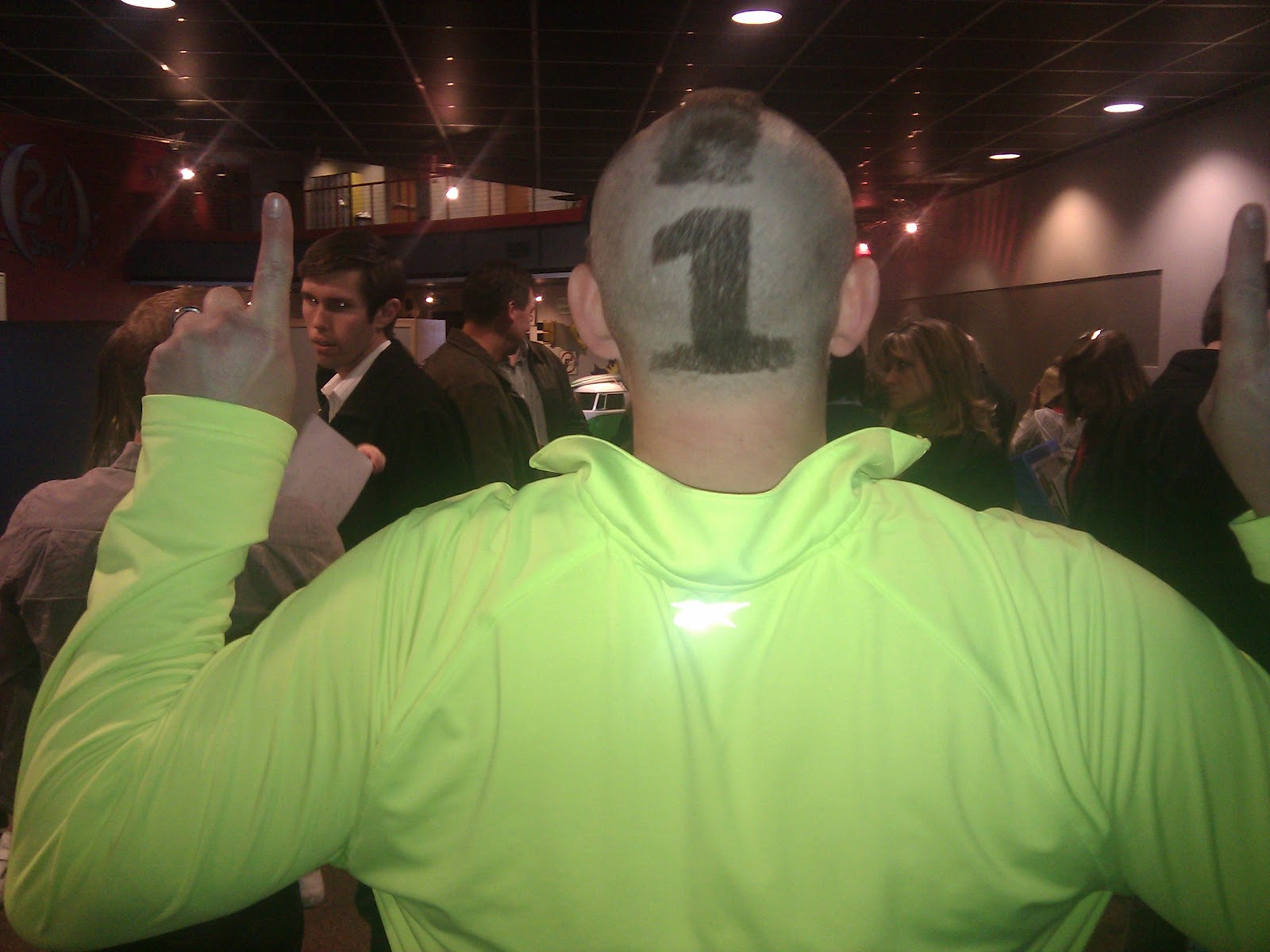
    To kick off the new series, our students were asked to partner with our church's adult greeter and assembly planning teams to create a race like, high-energy welcoming environment for each weekend worship participant.  So, our students (dressed in running gear) held signs of encouragement, gave out water bottles and race tags, and welcomed all who walked through the doors of our church with the enthusiasm only a teenager, and a few crazy adult volunteers (notice the shaved head--student volunteer--go figure) could muster.   IT WAS AMAZING!  Check out these cool pics from the event!


    This last picture is my favorite and captures the excitement of the day's Race Experience (BTW:  No senior adult was hurt in the greeting experience project).  Students and adults working on a project together--priceless!

    Our preacher's kickoff lesson for The Race series was excellent!  Not to steal his thunder, but as we process the impact this series will have on our church family, one of the most memorable highlights will be the day the students welcomed the church to worship. 

    Question:  What simple collaborations have led to big intergenerational wins in your church context?